The information below we also share with our pro riders, to combat the misconception that lower handlebars are “better”. The basics:
- The riders’ bodies have “built in” angles at which they can perform the best. So when a rider is at maximum effort, the body will put the body in the position most suited for that effort. In particular this pertains to the hip angle as it is the angle between legs and torso that determines mostly how the power is generated. Note: I am not talking here about increasing power by changing body angles, the power a rider can deliver is pretty much determined by his ability to transport oxygen and flush out lactic acid, but to generate that power (whatever level that is), the body will want to put itself into its optimal position, i.e. its optimal hip angle in order to best use the muscles best suited for the effort.
- This means that with the bottom bracket and saddle fixed, when the body assumes its optimal hip angle, the back position is also determined. There simply is a position for the back at which the body is best capable of giving maximum performance, because it is the back position at which its angle with the legs are such that the optimal hip angle is achieved.
- Hence, changing the handlebar height does not really change the back position, at least not during serious exertion. Therefore, with the back position more or less fixed, a change in handlebar position means a change in arm stretch/reach/angles. With the back more or less fixed, meaning the shoulders more or less fixed, the arms will assume whatever position it takes to connect the shoulders to the hands holding the handlebars (basically the elbows take up the slack).
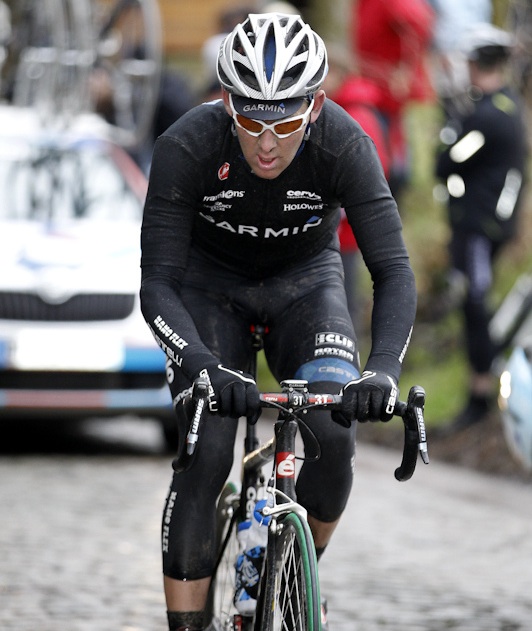
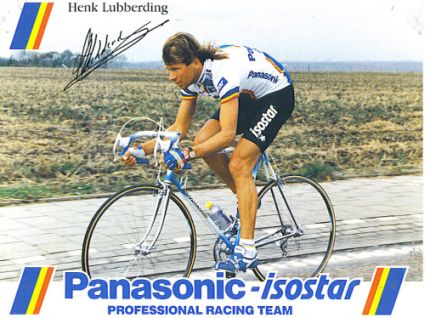
The idea that you will sit lower if you just lower your bars is not true in most cases, other than the extreme (basically if you can only reach your bars with stretched arms, which is a bad idea based on the Lubberding point, then lowering those barrs would pull down your entire body into an unnatural position. But if that is a position you can sustain, then you can also keep your back in that position when you raise your bars from there and bend your elbows.
Next we’ll look at what this means for performance. Any comments or questions, please leave them in the comments section below or let me know via twitter @gerardvroomen.




 gerard.cc