California Calculation

April 6, 2011

You may have heard rumors about a Tour of California idea to putting a women’s time trial next to the men’s event, and making the prize purse dependent on how many men the women beat. You can read the gist of it in autofact’s blog.

I agree with the blog that if these rumors were true, they would – in my eyes – be a monumental miscalculation. I say in my eyes because at the end of the day, it doesn’t really matter what I think. Any rider should decide for herself if she believes such an event is positive or negative for her and her sport. But to me the funny thing is that it would not only be a miscalculation of what women’s sport deserves, but also of the level that women’s cycling is at.

In the alleged proposal the bar is put so low (i.e. their expectation of the women’s performances are so low) that if for example Emma Pooley were to show up at this event, she alone would blow most of that prize purse out of the water. Two, three women would be enough to reach the maximum prize purse that they think may not even be reached with 10 riders!

It’d be funny if it wasn’t so sad. That said, I am fairly sure this is actually not a serious proposal within the organization. Instead either this year or next, there will be a full-fledged women’s race – maybe not the same format as the men’s race, but of the same level of excellence.


The Twittering Canary

April 5, 2011

You know how the canary in the coal mine is an early indicator of the health of the environment? Twitter can act as a similar indicator.

A few weeks ago in an interview with Gavia at the podium cafe, I mentioned that while women’s cycling deserves to be on TV and women riders are right to be upset with the lack of support within the cycling structure to make that happen, it is also important to look inward at what people can do themselves, not just at what they would like others to do.

“You can’t say, on the one hand, no one wants to watch us,
but at the same time you’re not on twitter yourself to promote your sport.”

[The quote in the article is slightly different, not so easy to get all the nuances right in a free-flowing interview, for the interviewer or the interviewed]. And strangely, there are far fewer women riders on twitter (or facebook) than men, even though on average they probably have more interesting things to say.

So then a funny thing happened. First off, a few women pros tweeted me that they read the interview and are now on twitter. That’s great, I hope that trend continues, also inside Garmin-Cervelo. Secondly, a lot of people jumped on the band wagon saying they would totally watch women cycling, if only the UCI would make such broadcasts happen.

But here’s the rub; just the way I feel women pros should focus on what they CAN affect and effect (race their hearts out, spread the sport via social media, etc), the same goes for the fans. It’s easy to say what you would do if somebody else first did this or that, but at the same time most fans aren’t following women pros through the avenues that are available today.

For example, @yokoteute is one of the world’s best cyclists, but she only has 699 followers. Are her tweets any good? I don’t know, as I wasn’t following her either, I definitely recognize I have ways to go as well. She now has 700 followers. The biggest fan base I could find was @marianne_vos with almost 8,000 (it’s in Dutch but that’s a pretty good number).

Anyway, I started a list of tweeting cycling pros. But then I saw that somebody else has done a much, much better job so just ignore me and go here.

Let me know if you agree or disagree in the comments below or via Twitter (@gerardvroomen).

———-

You can receive an alert when I post a new blog via email, Facebook, Twitter, Skype, LinkedIn or Instant Messenger!


Who do you want to win?

April 4, 2011

“Cycling is finishing everybody else’s plate before your own”

Watching yesterday’s Tour of Flanders and the post-race discussions, I started to wonder; who do you want to win cycling races? The strongest rider or the smartest rider?

To me, if cycling was all about the strongest rider, it would be rather predictable and boring. We should reserve that for the 100m dash or ergometer rowing championships.

The rouse of cycling is that while there are no tactics to turn MY legs into winners, the strongest legs can certainly be slayed by slightly weaker legs with superior tactics. Not always, but the fact that the chance exist makes cycling exciting. This concept has really nothing to do with yesterday, if Cancellara drinks enough he goes on to win on one leg. Let’s not have the outliers interfere with the principle.

However, those saying Nuyens isn’t a big winner because he wasn’t the strongest are really not doing his effort justice. He knew he didn’t have a big chance to win (witness the dejection in the Saxo car after the Koppenberg), but he never gave up and was able to maximize what small chance he had and his legs certainly weren’t bad. He saw Cancellara’s move at 3k was the his only chance and he turned himself inside-out for 500m to get on the wheel. Then he perfectly executed my favorite Hennie Kuiper quote (see at the top) by not working in that final breakaway and gambling on Cancellara’s desire to keep driving that 3-man break away from Boonen.

This also applies to Vaughters’ much discussed order to not help in the chase on Cancellara and Chavanel leading up to the Muur. He knew their chance to win was small, everything would have to come back together for a sprint. So why not work to make the chance of a sprint bigger? Because the work effort would have made the chance to hang on to that group over the Muur even smaller. No point working for a mass sprint if that effort means you can’t be in it. The only chance, no matter how small, for Garmin-Cervelo was to conserve energy by finishing BMC’s plates before their own, which were virtually finished already anyway.

Some people don’t like that, they think riders should always “do their share”, a sort of communist-ideal cycling philosophy. But again, that’s ergometer racing. Even Chavanel afterwards said he should have helped Cancellara in the break. Aside from the issue that he probably would have slowed down their escape every time he would have come to the front, it’s hard to see how their chase could have survived any longer. He didn’t appear to have the legs to go on the Muur either. I thought he rode a great race, he had no obligation to do any work with Boonen behind and tried to finish Cancellara’s plate. Aside from sprinting straight for the finish line instead of going through the impossible gap, chapeau!

Let’s hope Paris-Roubaix will be equally exciting.

So, who do you want to win?


Perfect tactics, no legs

April 3, 2011

Watching the Ronde today of course the conclusion has to be that Garmin-Cervelo didn’t play a role in the final. So where did it go wrong? It’s strange because when you analyze the race, they did almost everything right. They had a guy in the early break, they have two guys in the break of 19, and they were very well organized to stay out of trouble on the stretches where disaster usually strikes (Oude Kwaremont, Koppenberg, etc). So I think they executed the plan to near-perfection. And yet they didn’t play a role. Like Klier says. In the end it’s a primitive sport, and the legs decide. I can’t say I’m too concerned.

If there is a tactical comment to be made, it’s that the group of 19 should have stayed away, though it seemed that at least the Garmin-Cervelo riders and some others worked to make that happen. I don’t understand why some other teams didn’t invest in that break as they had 30 seconds and really EVERY team represented had a good reason (Cancellara) to work, and even everybody behind who was not represented in the group had a reason (Cancellara) not to work. Why this didn’t happen I will never understand.

That said, this was one hell of a Ronde, very exciting to watch. A great trio on the podium plus the fans a clear winner too. And yes, Cancellara didn’t win (though his early riding and maddening tactics of the other teams definitely made me sweat about my prediction). As he said afterwards, the pressure and the nervousness of the race got to him a bit and he didn’t drink enough, causing cramps.

The good news is that next week’s Paris-Roubaix promises to be a great race. So many potential winners, and after today no clear favorite. That should suit Cancellara, if he starts.

Let me know if you agree or disagree (I have a hunch a good few will disagree) in the comments below or via Twitter (@gerardvroomen).

———-

You can receive an alert when I post a new blog via email, Facebook, Twitter, Skype, LinkedIn or Instant Messenger!


Garmin-Cervelo’s classics dream team?

April 1, 2011

Yesterday I commented on a cyclingnews.com article. There was another snippet that caught my eye:

“The bar was set high when the team signed Haussler,
Hushovd, Klier and co from Cervélo TestTeam to
create a Classics dream team”

Of course, the 2011 Garmin-Cervelo men’s team has great strength and depth for the Classics. On top of that, they are also some of the finest riders to work with, so there is not a single rider I would like to change out for any other (no, not for him either). But the whole dream team thing seems to be a little hyperbolic, which I understand sells magazines, banner ads and can also trap the occasional team fan or partner.

But let’s put it into perspective a little. This classics team is probably the strongest team ever to never have won a Classic. That’s right, despite the incredible strength of these riders, none of them has ever won a Classic. I am pretty sure that will change shortly, as the talent, desire and especially team spirit is there to make it happen, but expectations may need to be a bit more reasonable. By comparison, Leopard has four Classics winners on its roster if I counted correctly.

So a great team, yes, and without a shadow of a doubt the world’s best group to work with as an equipment partner. But let’s give them some time to win their first Classic (like a day or two, or nine :-)). Let me know if you agree or disagree (I have a hunch a good few will disagree) in the comments below or via Twitter (@gerardvroomen).

———-

You can receive an alert when I post a new blog via email, Facebook, Twitter, Skype, LinkedIn or Instant Messenger!


Is it really just the result that counts?

March 31, 2011

After E3 and Gent-Wevelgem, cyclingnews.com wrote an article on the winners and losers of the weekend criticizing Team Garmin-Cervelo among others. It writes:

“The team’s tactics in E3 were spot on but
they were steam rolled by Cancellara.”

So let me get this straight. If a team’s tactics are spot on but there is another rider simply stronger on the day, that’s considered a failure? That means that no matter what, any race has one winner, seven team mates and 192 losers. I fully understand that many will proclaim that “this is how the world works”, “this is sport”, etc, but I humbly disagree. Not because I have an affiliation with this team, but on the principle.

In many sports, and particularly in cycling, there are a lot of things you don’t control. Therefore, making the win the only thing that counts is a dangerous approach (in many ways). All you can really do, and I believe all you SHOULD really do as a team, is focus on creating the best possible environment (training, equipment, nutrition, strategy, tactics, communication) for the riders to achieve their optimal performance and for the riders to execute to the best of their ability. If that happens and nobody does it better, you win. If nine other guys are stronger, you come tenth. Either way, your quality of execution is the same.

So to the team I would say, congrats on gelling so quickly and delivering what cyclingnews.com considers the perfect race. That’s all we can ask for. Let me know if you agree or disagree in the comments below or via Twitter (@gerardvroomen).

———-

You can receive an alert when I post a new blog via email, Facebook, Twitter, Skype, LinkedIn or Instant Messenger!


The Cancellara conundrum

March 30, 2011

I can’t remember a race with a clearer favorite than this weekend’s Tour of Flanders for a long, long time. It sounds like all Cancellara has to do is show up, avoid the snipers and pick up the award. So let me make this prediction: Cancellara will not win on Sunday.

Before I get into this, I’d like to remind everybody of Tim Krabbé’s truism in The Rider: “Joop Zoetemelk will never win the Tour de France, and the quality of the prediction is independent of the outcome. It is therefore still a great prediction, despite the fact that Zoetemelk won the Tour in 1980.”

Normally speaking, Cancellara cannot win Flanders this year. With 192 riders against 1+7, the one has no chance. Not even Cancellara. And when you ride as he has, there is no reason for the 192 riders not to race against the one. So when the first group of 40 riders breaks away, there are two options:

  1. Cancellara is part of it, and nobody will want to ride, and so the break is caught and the next one goes.
  2. Cancellara is not part of it, in which case everybody will want to ride and behind nobody will, except a few Leopards. I’d like to see one team race a breakaway of 40 for 260k and come out on top.

This of course presumes one critical element: 24 teams making the right decisions. This has nothing to do with collusion, race radios or the like, every team independently can come to the conclusion that the only chance for them to win is to not help Leopard at any stage of the race. There’s also nothing unfair about beating up on Cancellara, the goal is to win the race, and you have to deploy the strategy that leads to success. Anything less would be unfair. If the purpose was to give away the win to the strongest rider, then we didn’t need the race or at the very least, we could just do power measurements on ergometers.

Whether or not every team WILL make such a decision is another story.

Then there are of course also other factors that can derail even a rider as strong as Cancellara:

  1. Mechanicals (he had two flats and a bike change last weekend, that’s a bit much)
  2. Sickness
  3. Pressure (he was a big favorite at Paris-Roubaix in 2007 and finished 18th, though the Cancellara of 2011 is a different beast altogether)

Before the other teams start popping champagne bottles, there is however a second part to the riddle they have to solve: How do they prevent a Leopard like Stuart O’Grady from winning? When the break of 40 goes away, he’ll be in it. He won’t have to work (waiting for Cancellara) and although all eyes are on his master, Stuart has the legs and the head to survive anybody in that breakaway and go for glory. That’s of course what happened at Paris-Roubaix in 2007. I remember that race quite well as I was there and of course he was riding a Cervelo, and it was one of the most exciting and surprising races I have ever seen (watch it here).

We’ll see what happens on Sunday but remember, it’s still a great prediction regardless!


Radio Interference

March 25, 2011

I guess we should all be very happy in pro cycling-land. Finally we’ve found a topic that gets more press than doping: radios. I won’t add my point of view to the mix, but I would like to point out the misconceptions that are dominating the discussion and are preventing the sport from finding a good solution:

  1. Riders are remote-controlled by the sports director in the car. There are certainly teams and riders where this applies to some degree, but in many teams it doesn’t, especially in the classics. There the team car is often miles behind, with a sports director watching a tiny TV with crappy reception. During the race, you need an Andreas Klier near the front of the peloton much more than a Jonathan Vaughters in the car. In this episode of Beyond The Peloton Klier explains his tactical role in the race and you can here him use the race radio – much more than the sports directors. Those that argue the sports director does nothing other than hand out water bottles are also molding the facts to support their position of course, it’s not so black and white. Fact is, the information from the car makes a difference, but it doesn’t completely alter the race.
  2. Radios may have a bigger effect in sprint stages, where the peloton now often catches the breakaway with laser precision. However, those who think a radio ban will give the breakaway a bigger chance may be mistaken, the tactical adjustment from the sprinter teams would likely be to run less risk and shut down breakaways sooner, leading to a less interesting race.
  3. The safety aspect is often misunderstood. Most teams have cars in front of the race, and they give information about dangerous situations to the team car which then parlays it to the riders. This is a function that could also be performed by a neutral entity, it fact one could argue that it is the duty of the race organizer and the sanctioning body (the federation) to provide this information, but at this time that simply is not the case to the extent needed. If a decision is made to take the radios away, then it should be coupled with an extremely strict liability for the race organizers and sanctioning body that the course be safe. Judging by the number of parked cars on the route this weekend, there is a long way to go there. Regardless of where you stand on the radio issue, it’s unfortunate that the decision to take the radios away was taken without taking the steps to safeguard safety in other ways.
  4. The radio ban makes the races dangerous because the sports directors now have to make crazy maneuvers to talk to the riders. There is actually no rule written anywhere that sports directors have to drive like idiots. It is allowed to use common sense and realize that bike racing is not worth endangering anybody’s lives. I remember a situation last year at Paris-Roubaix (with radios) where one team’s service car drove away from the Arenberg forest at 100+ kmh on a road that was not even part of the course, while spectators leaving the forest on foot had to jump out of the way to save their lives. Bottomline, stupid driving behavior has little to do with radios, it is ingrained in this sport where the people driving cars (sports directors, soigneurs, journalists, etc) sometimes feel way more important than they really are in the grand scheme of things. A radio ban would certainly increase the number of opportunities they have to act stupidly, but it’s not the real cause. BTW, Maarten Ducrot wrote about this aspect much more eloquently than I, so if you read Dutch, check out his blog.
  5. Maybe the biggest misconception is of a different kind, the idea that this is about race radios. This conflict is not about the radios, it’s about changes being made without proper input from those involved. Now, the teams and riders are not without fault here. The teams, organized in the AIGCP, have been too busy with in-fighting instead of presenting a united front. They also have been absent when the federation has made decisions in the past without proper input. For example, when the federation changed the technical rules governing bike design, they did so without input from the manufacturers. The AIGCP, represented at the crucial meeting by just one team, chose the UCI’s side (BTW, that team told me they did so not because of any high-minded conviction, but because they thought their bikes would pass the new rules so they saw an advantage). Same with the riders, they have been asked for their opinion by their “union”, the ACP, several times and never responded in great numbers. And now that it’s almost too late, they wake up.

I hope all AIGCP and ACP members understand that this is not about the radios, but rather about having a say in how this sport is run. I also hope the bike manufacturers’ organization joins the AIGCP and ACP, not necessarily with any opinion about the radio but to support the right to provide input. For me personally, I don’t like the radios, but I will support any movement in favor of radios if that’s what the majority wants, on the basis that it’s the bigger picture that counts. I hope that everybody in cycling, UCI, AIGCP, ACP race organizers and manufacturers will take some inspiration from Voltaire’s most famous quote (which ironically he never uttered and wasn’t “invented” until after his death): “I disapprove of what you say, but I will defend to the death your right to say it”. It’s high time to leave the narrow interests behind.

As always, let me know what you think, either here in the comments section or to my Twitter account @gerardvroomen.


Riding the Cape Argus Pick ‘n Pay Cycle Tour

March 10, 2011

(photos (c) Cape Town Cycle Tour Trust)

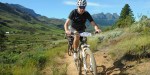
In March 2010, I was in Cape Town for business. As part of that trip, I rode the Argus Tour and fell in love with it. 35,000 people riding their bike, huge crowds dotting the course and scenery that can compete with any ride anywhere in the world – what’s not to love?

Come to think of it, just one thing: To ride the Argus Tour in mid-March, us Northern-hemispherians have to train in weather that couldn’t be farther from what we can expect in Cape Town. Last year the training pre-Argus consisted of three 60k rides, this year I decided to take it more seriously. With six rides under my belt, I got onto the plane.


Arriving in Cape Town mid-week, the city was already buzzing. It’s a great experience to see a city taken over by cyclists, and not have anybody complain. The locals seem to truly love this event, and go out of their way to make everybody feel welcome.

The “locals” means not only the residents, whose streets are blocked for the course and whose favorite cafes are occupied by (sports) celebrities big and small (this year’s event included Miguel Indurain, Stephen Roche, Maurizio Fondriest, Daley Thompson, Morné du Plessis and many more), it also means companies like Pick ‘n Pay who host their guests with incredible hospitality even if, for example in my case, all they can ever hope to receive in return is that I buy a few bananas at their local grocery.

The fact that on the morning of the race, the 80-year old former chairman of Pick ‘n Pay and his wife were at the start at 6am to wish participants good luck tells you how everybody embraces this event.

Shortly after receiving his well-wishes, were were off for our 110k. Last year we were in a very fast starting group, so when 100 riders formed a peloton, it was easy to be part of it. This year we started in a much slower group, so when six riders took off I thought it might be my only chance for some good speed and I jumped in. A minute later I realized that was a mistake, and on the first climb I decided to ride my own pace.

Immediately I was overtaken by another group of 15, with Stephen Roche sitting in the middle smiling. I wouldn’t see him again until the finish. It’s not until the first big climb, Boyes Road, that you realize how amazing the organization of this event is. You’re riding ten wide and when you look up all you can see are hundreds and hundreds of colorful jerseys rocking back and forth up the hill.

To keep this course clear of traffic and safe, to have food, massages, medical assistance and technical support of the highest quality and to still make people feel like it’s a family event is no small feat, and the group around Dave Bellairs pull it off with what seems like no effort at all.

After Boyes Road a small group is formed that includes Mr. Pink & Drive, Mr. Sleeveless and Miss Nedbank. It’s amazing how in a sea of 35,000, there are people you see over and over again. You may drop them on a climb and get caught again on the descent, and as I identify them by their jerseys I tend to give them names (what else are you going to occupy your mind with).

With 30k to go it is time for Chapman’s Peak, generally considered the toughest climb. But today it seems a lot easier than in the training ride, must be the wind direction. Whether it is the conditions or my condition, I fly up Chappy’s (using the term flying lightly) and push it on the descent to the final climb, Suikerbossie.

I have a love-hate relationship with this climb, it loves to hurt me while I hate to climb it. It’s a straight and very wide road, so it seems to never end.

From the top of Suikerbossie, it is more or less downhill except that just like last year, the headwind makes it slow. Realizing there is time to be gained here, I push it on the descent which is not a pleasant experience. Most riders take it easy here so there isn’t much help, and anybody you catch is caught for a reason and usually also not much help to make you go faster.

As usual, I finish a little too fast and upon crossing the finish line, my back decides to lock itself in one position (and it isn’t “straight”). Oh well, it pays off with an 18 minute improvement over last year, which was roughly what I was hoping/expecting. But it doesn’t really matter, and Stephen Roche’s ride exemplifies that.

He was probably 15 minutes ahead of me by the time he reached Chapman’s Peak, but then he decided to stop and wait for some friends (including Cyclosport’s Sven Thiele). He waited so long that he ended up finishing behind me, but he had a wonderful time, as did everybody in our group of 20. Some reached the podium in their category, some finished for the first time, but the common denominator is that we will all be back next year. I can’t wait.
Mixed Emotions

December 7, 2010

Last week was the first meeting of the new Garmin-Cervelo team. It also meant a last time to see some of these riders in their beautiful Cervelo TestTeam outfits. A sad moment for me, realizing that this venture was over, but I think that given the options, we made the most of it.

  1. As of this moment, 81 of 85 people on the Cervelo TestTeam have found new opportunities. That includes all 14 riders who were under contract for 2011, plus most of the riders and staff not under contract. I’m quite happy with that, as many were worried that this would be very difficult. The riders, staff and management have done a great job to help each other find something for next year. Of course the work isn’t done until the final 4 have also found something.
  2. Most of the sponsors have also found homes elsewhere. Some at Garmin, some elsewhere. There we tried to also help as much as possible, of course for those who were under contract with CTT for next year as we were obliged to, but also for those who were not as we really get along well with our industry partners and want them to be successful, with or without Cervelo.
  3. While the CTT pro team stops, I am hopeful that we made a tiny difference in pro cycling and that some of our ideas will live on. Certainly, some of our ideas regarding fan access have been picked up by other teams and by our riders. It was amazing to see that Appollonio, Bos, Tondo and Reimer – all riders not riding on a Cervelo next year – were present at our dealer training weeks in November. They could have easily said no, but they all said more or less the same thing: We joined this team because it was different, and we enjoy spending some time with regular people who enjoy these bikes just as much as we do.
  4. Obviously product testing will live on at Garmin-Cervelo. We started this at Team CSC, when we looked at a team much more as an R&D support than a “victory-machine”. When that aspect of the team equation got really hard to continue, we went to the next level with CTT. And now with Garmin, a team that already had an interest in innovation, we’ll be able to continue using the pros to make better bikes for all our customers.
  5. Maybe most importantly, our spirit will live on. It was amazing to see that the Garmin team, without any prompting from us, suggested to honor some of the things initiated by Cervelo. Obviously we are happy when any team does that, whether we are associated with them or not. After all we weren’t looking to protect any of our ideas in the past two years; we wanted them to spread. It’s nice to see when that actually happens. More on this in a later blog.

So on the one hand it certainly feels as a failure – after all, our goal was to find a secondary sponsor so we could continue and although it looked good, it didn’t happen in the end. On the other hand, there is a silver lining and I feel very positive about the future. Not only with regards to our participation in pro cycling, but also regarding our new R-series, our distribution, the simplification of our operations, everything is pointing in the right direction now. But I’ll get back to that later as well.